


Cold brew tea, a beverage for our times

I have touched on this before but merely as an idealist rather than a consumer of at least 500ml of cold brew tea per day (on top of my 2 litres of hot brewed), as I am now! So, this is not some babble intended for eyes on a page but rather a kick up the arse for tea promotion.
Iced tea is ubiquitous in the United states, peculiarly, the only nation to drink more fresh brewed cold tea than they drink fresh brewed hot tea because, by all accounts, we, as a species, consume approximately 80% of all liquid cold.
It is odd, too, that those nations that turn their noses up at the American habit are more than willing to buy a bottled tea beverage off the supermarket shelf or, worse still, some dreadful muck made from ingredients that can only have come from a chemical works.

Obviously, there are different channels and needs but still, the irony seems stark, particularly in an age when concerns over sustainability, carbon footprints, natural and health and wellness consume the category talk (all puns intended).
I do not, for once, consider RTDs as vile, there are some absolutely splendid, flavourful products out there and, frankly, if they maintain tea's relevance then all power to them!

But, I still scratch my head at the apathy of the trade, towards the obvious solution to most of the above.
Starting from the top, let's consider why we should drink tea. It should be because it is a flavourful and, yes, a healthy way to hydrate.
Now let's consider the chemistry of tea which is made up of a variety of small compounds, good for you and flavourful, that are easily soluble in water and some larger molecules that also have merits both in cup profile and health but are not easily soluble and finally some even larger things that we don't need and don't want. The key to getting both the good groups infused into your cup is to use hot water (The hotter the higher the solubility of all that goodness) but that does open the door to the third group too and so time to infuse has to be managed too.

Most iced tea, out of home, is hot brewed for quick extraction and then diluted back with cold water to bring it to room-ish temperature that, poured over ice, gives us that very palatable and refreshing southern gem! The trouble with this method is that it is still hot brewed tea just diluted, which means everything is in! Important for body and colour but not for imparting seasonal, terroir or manufacturing nuance.
RTDs are similar and different; most are made from a concentrate of tea, be it brewed from fresh leaf, in series with bottled production or via a secondary process where it is brewed and dehydrated ( simplistically) into instant tea powder which is then reconstituted with water at a bottling plant some time in the future.
The effectiveness of these is broad, some are shamefully bereft of any tea notes, merely riding the consumer's investment in those values mentioned above, while others are carefully engineered from fresh leaf or with aroma add backs giving strong nods to their terroir and make!
A moral choice? I cannot help but mention that we are still talking about a beverage that could be made at home utilising water from a tap and brewed in a reusable vessel rather than ferrying water around in a disposable container, after some energy rich processing; enough said.
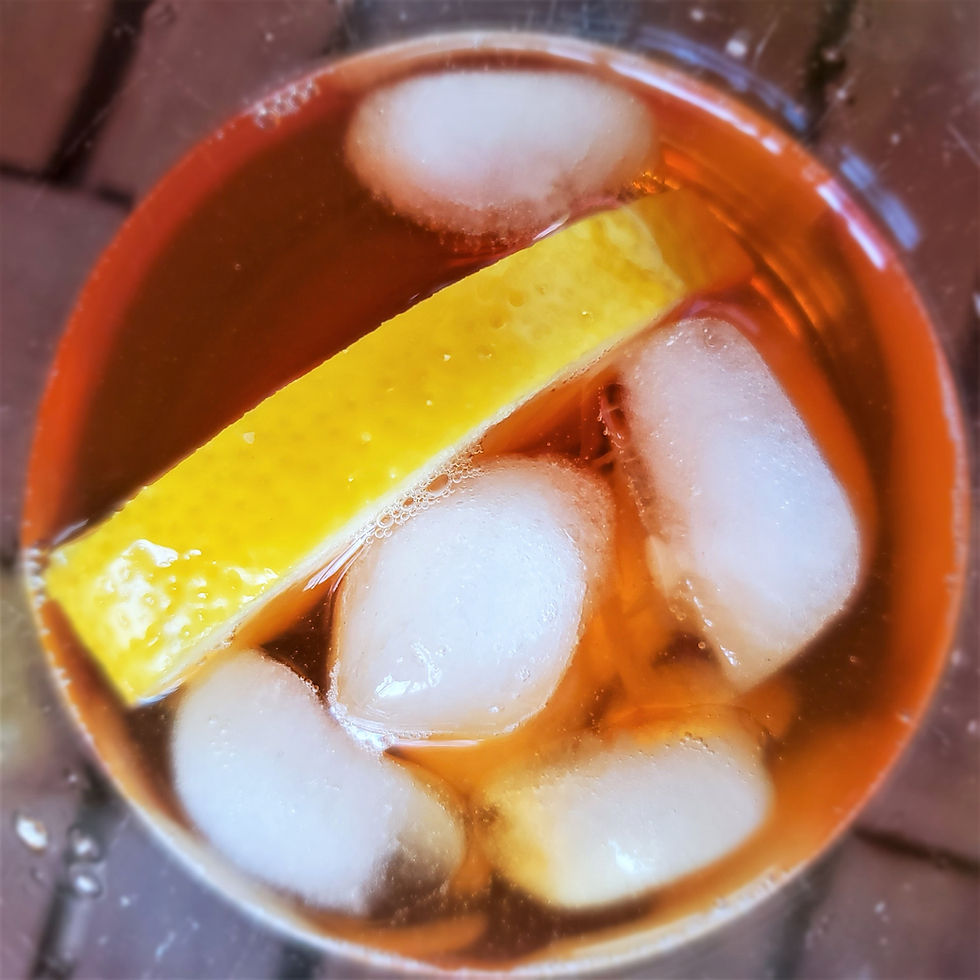
DIY, simple! So, back to cold brew, it is as simple as putting tea leaf into a reusable container (use 2 teaspoons loose or two teabags) pouring cold water (500ml) onto it, stirring and waiting! Yes, the investment is time but so what (Patience has zero carbon footprint!), make it in advance, overnight it and take it to work, or your work out the next day and know that you have avoided the majority of hot, iced or RTD tea's carbon footprint, heating water!

You also avoided, in the case of RTDs, the carting around of water and the unknown, as to where that single use container ends up, even if it carries a recycling mobius.
Is it worth the hassle? Oh heavens yes; you will unleash a world of sensory exploration that you would not give tea credit for, as even the rather mundane brewed hot can surprise and delight when the larger boys (compounds) aren't invited to infuse. What you get is a window back to the fermentation (oxidation) stage for blacks and oolongs or to the edges of the field for greens, which offer bright vegetative notes with oceanic and mineral notes that would leave your Pinot gris blushing.
The grape talk here is apt because this preparation peels back the layers of production to allow one to experience impacts of terroir and raw material on the palate. Darjeeling 2nd flushes, still amber but now devoid of any deflection are all floral and bright zest (Chardonnay (un-oaked) for the sober-curious) whereas oolongs stray more towards Sav blancs with oodles of stonefruit and soft edges.
Finally, if you are taking these out with you, great, but at home I strongly suggest stemware for greens to Oolongs and your cut glass whisky tumbler for an East African or Hao Ya Keemun, both expressive and full in ways that will pair beautifully with a log fire or a sun drenched terrace!
Have I done enough to convince you? I should have and here are a few trials for you to conduct, in case you are still a doubter.
Kumaon Black Tea from Uttarakhand (Youngmountaintea.com ) : This is, at the outset, a nice looking black stylish OP but this totally undersells it as a hot tea and particularly as a cold brew.
What is a pleasant, smooth and malt laden hot brew morphs into a floral peachy cacophony , if you could taste sound, this would be it. Church bells to vuvuzelas; full on assault, in the best possible way.

Japan Sencha (This one from Shizuoka)
Brilliant hot but refreshing, more oceanic than umami, when cold brewed, but not delicate, rather full on seaweed with underlying lychee, yes, and a very pleasing nutty finish. Oh and do not discount adding a little (approximately half teaspoon per 500ml) matcha to the two teaspoons of Sencha prior to brewing; this ups the intensity, the colour and the benefits while remaining surprisingly smooth and more complex.

KTDA EOR FBOP:
A robust, malty extravaganza, more mahogany and brown sugar than anything but with a sweet floral note running through it; it's a rum-esque option for cocktails but deliciously refreshing on it's own.

Of course there are a myriad other teas I could have waxed lyrical about but, suffice to say, cold brew impacts all teas the same way; that lower solubility in cold water is like distilling flavour from other browner, more structural compounds, while maintaining the benefits.
In a world where everything is happening way too quickly, I would suggest politicians take to this method of brewing tea, if only to give them more time to think!
Happy sipping


Comments